RFE
23 Apr 2026, 10:59 GMT+10
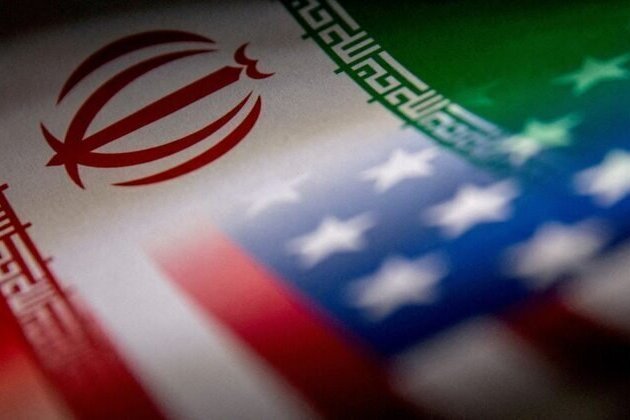
WASHINGTON -- The expiration of a US sanctions waiver on Iranian oil last weekend has brought renewed attention to Washington's economic strategy, as policymakers seek to limit Tehran's access to revenue while navigating global energy market pressures.
The measure, known as General License U, lapsed on April 19, ending a short-lived window that allowed a significant volume of Iranian crude -- estimated at up to 170 million barrels -- to circulate more freely on international markets.
The decision coincides with a broader push by the US Treasury to intensify pressure on networks linked to Iran's military procurement, including a new round of sanctions announced on April 21 targeting entities involved in weapons development.
SEE ALSO:
Rachel Ehrenfeld: Why Targeting Iran's 'Shadow Economy' Hits The IRGC Where It Hurts
For some analysts, the timing reflects a deliberate effort to align economic tools with a wider strategic posture.
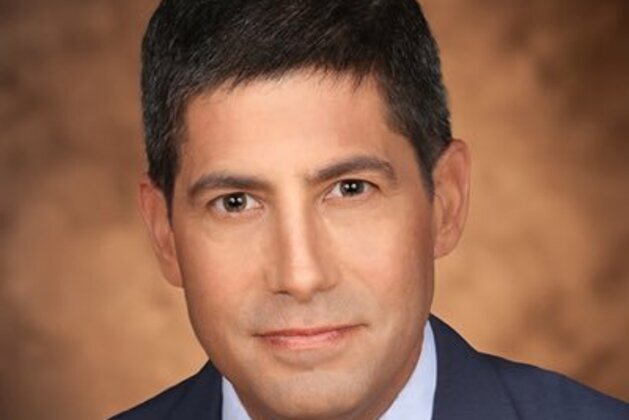
"I think that the administration let the waiver expire to be consistent with the terms of the blockade," Max Meizlish, a former US Treasury OFAC official, told RFE/RL.
"The objective is to deprive the regime of the revenue and assets it needs to sustain its efforts," Meizlish, currently a research fellow at the Foundation for Defense of Democracies, added, noting that continuing the waiver -- effectively allowing Iranian oil shipments under certain conditions -- would have conflicted with that approach.
A blockade of Iranian ports aimed at limiting tanker movements, despite mixed reports of enforcement, underscores what Meizlish described as an attempt at policy consistency.
While the waiver's expiration closes off one avenue for Iranian oil sales, its overall impact remains debated, particularly regarding whether it meaningfully altered global supply or primarily affected pricing dynamics.
During the waiver period, Iranian crude, which previously sold at a discount due to sanctions, was able to compete more openly on international markets.
According to sanctions expert Brett Erickson, this shift had tangible financial consequences for Tehran.
"What we saw was a transition from discounted sales to, in some cases, pricing above benchmark levels," Erickson, managing principal at Obsidian Risk Advisors, told RFE/RL.
"That change in pricing power, even more than volume, significantly boosted revenues."
Estimates suggest Iran may have gained over $1 billion in additional income during the waiver period -- modest compared to early projections but still notable.
At the same time, both experts questioned whether the policy delivered lasting benefits to global energy stability.
Meizlish noted that while the waiver may have allowed Iran to extract higher prices, its role in stabilizing markets was likely limited.
"It was unlikely that the license itself actually provided much more supply," he said, adding that stronger oversight mechanisms such as escrow arrangements or reporting requirements could have improved transparency.
The latest US Treasury designations targeting individuals, firms, and aircraft tied to Iran's defense sector are part of a familiar sanctions playbook. But Meizlish suggested current conditions may call for a broader application of financial tools.
SEE ALSO:
Azeem Ibrahim: Iran Conflict Will Be Decided By Who Can 'Endure The Most'
"It's good to see additional sanctions packages," he said. "But the question is whether this approach matches the scale of the current situation."
He pointed to the potential role of measures aimed at financial institutions that facilitate Iranian transactions, particularly in jurisdictions where Iranian funds have historically circulated. US officials have already signaled that banks in several regions could face consequences if they fail to restrict such activity.
The effectiveness of this approach, analysts say, will depend on follow-through.
More assertive measures, such as designating institutions under authorities tied to anti-money laundering concerns, have historically had far-reaching effects, in some cases cutting off banks from the global financial system.
Erickson described the broader strategy as an attempt to apply what officials have called the "financial equivalent of force," a campaign of sustained economic pressure aimed at constraining Iran's ability to operate.
In practice, he said, this could include tightening enforcement of oil restrictions, increasing financial isolation, and applying secondary sanctions on institutions that continue to facilitate trade.
"This is a comprehensive form of economic pressure," Erickson said. "The question is how quickly it produces results, and how markets respond in the meantime."
Both experts highlighted the adaptive capacity of sanctioned economies, noting Iran has previously developed workarounds -- from informal shipping networks to alternative financing channels -- to mitigate restrictions.
At the same time, the success of any strategy will likely depend on coordination with international partners and consistency in enforcement. Fragmented approaches, Erickson noted, can reduce overall effectiveness.
End Of Iran Sanctions Waiver Sharpens Focus On Financial Pressure
Share
ShareCopy link
X (Twitter)
Share
ShareCopy link
X (Twitter)
Get a daily dose of Iran Herald news through our daily email, its complimentary and keeps you fully up to date with world and business news as well.
Publish news of your business, community or sports group, personnel appointments, major event and more by submitting a news release to Iran Herald.
More InformationNEW YORK CITY, New York: The impact of the Iran war is spreading far beyond fuel prices, with rising oil costs now pushing up production...
BEIJING, China: Chinese automakers are stepping up their challenge to global luxury carmakers, unveiling a wave of premium vehicles...
NEW YORK, New York - U.S. stock markets closed higher on Wednesday, with the major indexes posting solid gains after President Trump...
NEW YORK CITY, NEW YORK: Meta is rolling out internal tracking software that records how employees interact with their computers, as...
LONDON, U.K.: Olly Robbins, the ex-civil servant who was fired from his job for approving Peter Mandelson's appointment as British...
WASHINGTON D.C.: Federal Reserve chair nominee Kevin Warsh signaled sweeping changes to U.S. monetary policy on April 21, calling for...
DUBAI, U.A.E.: Diplomatic efforts to restore global energy supplies and ensure a second round of talks between the United States and...
HONG KONG: Asian airlines are seeing a surge in demand for travel to Europe as disruptions at Middle Eastern hubs force passengers...
ISLAMABAD/WASHINGTON/CAIRO/: Last-minute ceasefire talks between the U.S. and Iran appeared increasingly uncertain as the two-week...
LONDON, U.K.: Apple has named longtime executive John Ternus as its next chief executive, marking a leadership shift at a critical...
NEW YORK CITY, NEW YORK: Oil prices rose sharply in early trading on April 19 after renewed tensions between the United States and...
The US government under Donald Trump has twice used disingenuous negotiations with Iran to provide cover for attacking it, in June...