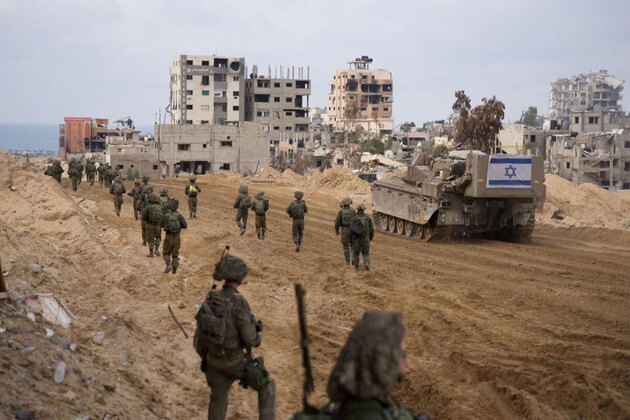
Xinhua
27 Nov 2025, 11:15 GMT+10
As the ceasefire's first anniversary approaches, I can only hope that true peace will finally arrive and endure, giving people the chance to heal the wounds.
by Dana Halawi
BEIRUT, Nov. 27 (Xinhua) -- On Sunday, I was sitting in the autumn sun, enjoying a pleasant afternoon. The Mediterranean wind swept through the city, carrying the diesel exhaust from the thousands of generators that supplement a power grid delivering electricity only in intervals.
Suddenly, the ground murmured. A low, percussive thud rose from the south. In this city, no one needs subtitles for that sound.
Minutes later came the news: three Israeli missiles had struck a residential building in Haret Hreik, on the capital's southern suburb of Dahieh. Five people were killed and 28 were wounded. Among the dead was Haytham Ali Tabatabai, a senior Hezbollah military commander.
When I arrived, the scene was grim and familiar: another building torn open, its windows blown out, rebars jutting at odd angles, air-conditioning units hanging from ruptured concrete, and cars buried in dust. It was the kind of sight Beirutis saw daily about a year ago.
The assault came just days before the first anniversary of the ceasefire which was intended to end the war, dampening people's hope of lasting peace.
On Nov. 27, 2024, Israel and Hezbollah agreed to end their 14-month conflict, which began when the group opened a southern front in support of Hamas. The truce offered hope that millions of Lebanese could return to normalcy.
Since then, exchanges of fire have continued along the southern border. Last week, Lebanon's Health Ministry said Israeli strikes and other violations since late November 2024 had killed more than 330 people, mostly along the border, and wounded over 940.
Yet Beirut had maintained a fragile calm. The hundred kilometers separating the capital from the frontier once seemed a protective veil. But Sunday's attack tore through that illusion, exposing the reality that the peace many Beirutis clung to was nothing more than fragile glass -- easily broken by a single rumble.
Almost one year since the ceasefire, the country is still counting its dead, assessing damage to its neighborhoods, and grappling with a war compounded by an economic collapse already among the worst in modern history.
The financial crisis, which began in 2019, reached catastrophic levels by early 2024. The Lebanese pound had been decimated, losing more than 98 percent of its value, while inflation surged to 221 percent in 2023, eroding savings and livelihoods across the country.
The war only hastened this descent, flattening villages along the border, gutting large swaths of Beirut's southern suburbs, and displacing tens of thousands -- leaving them with no stable place to return and no certainty for the future.
"I haven't bought anything for myself since 2019," said Hilda Shebel, a human resources manager, measuring rice in her worn but spotless kitchen. A wall calendar, marked with school fee deadlines and generator fuel payments, hung nearby. "Everything goes to the children."
Like Shebel, much of Beirut's middle class has been stripped of its former life, their existence reduced to little more than bare survival.
Nathalie Halwani, a lawyer trained in London, returned home expecting to build a career. Instead, she is offered clerical work or short-term consultancies paying less than 600 U.S. dollars a month -- barely half the cost of modest rent in Beirut. Her classmates abroad earn many times that amount.
"Everything is expensive here, and salaries are an insult compared to what we can do," she lamented. "There is no future."
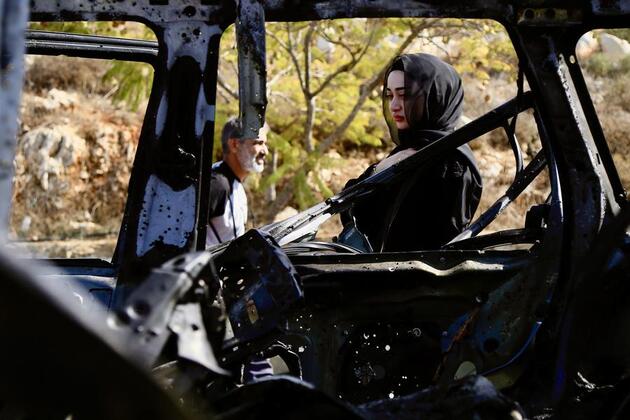
The war's physical scars deepen further south. One day, as I drove down from Beirut and beyond Marjayoun, the paved road gave way to gravel and then to mud pocked with shrapnel craters. More than 30 border villages were almost entirely leveled. Roughly 100,000 residents fled north, leaving behind homes now reduced to concrete shells or only foundations.
In the border village of Kafr Kila, local farmer Adel Sheet walked me through the wreckage of his neighborhood. "No electricity, water only delivered by tanker at prices we can't afford, fields bulldozed, agriculture finished," he said. "Markets closed, jobs gone, young people leaving. Poverty is the only thing still functioning here."
On my way back to Beirut, twilight descended over the city. The skyline stood silent in the fading light while distant calls to prayer blended with the hum of generators. It struck me then: this is how Beirut endures -- one repaired shoe, one rationed bag of rice, one brief smile exchanged between neighbors at a time.
Yet Sunday's strikes shattered that fragile equilibrium once more, carving a fresh, brutal wound into Dahieh, a neighborhood already marked with deep scars.
It was only last year that this area suffered relentless airstrikes, pager detonations, and walkie-talkie blasts in the war's final, devastating months, which ultimately killed Hezbollah leader Hassan Nasrallah and much of the movement's leadership. One year later, much of Dahieh is still in rubble from that bombardment.
Standing there amid layers of destruction, both old and new, the question became inescapable: how long can a country function without assured safety, electricity, a stable currency and an economy that offers more than survival?
As the ceasefire's first anniversary approaches, I can only hope that true peace will finally arrive and endure, giving people the chance to heal the wounds.
Get a daily dose of Iran Herald news through our daily email, its complimentary and keeps you fully up to date with world and business news as well.
Publish news of your business, community or sports group, personnel appointments, major event and more by submitting a news release to Iran Herald.
More InformationNEWARK, New Jersey: A record Thanksgiving travel season was expected in the United States, but a 43-day government shutdown has reduced...
NEW YORK, New York - Wall Street enjoyed a robust session on Wednesday, with major indices climbing across the board as investor optimism...
Thousands of baristas at nearly 100 Starbucks locations are on strike this holiday season, picketing outside the iconic cafes for a...
NEW DELHI/DUBAI: India's long-running effort to promote its Tejas fighter abroad has suffered a significant setback after one of the...
BRUSSELS, Belgium: A growing number of major European companies are rolling out job cuts or hiring freezes this year as economic conditions...
HONG KONG: China's vision of a future filled with pilotless air taxis and drone-powered services is taking shape across its southern...
DUBAI, U.A.E: An Indian fighter jet crashed during the Dubai Air Show this week, killing its only pilot. The HAL Tejas went down moments...
JOHANNESBURG, South Africa: The United Arab Emirates is stepping up its global AI ambitions with a new US$1 billion plan to help expand...
BEIRUT, Lebanon - Israel has shattered the ceasefire with Hezbollah, brokered last year by the United States with yet another assassination....
As the ceasefire's first anniversary approaches, I can only hope that true peace will finally arrive and endure, giving people the...
SHARJAH, 27th November, 2025 (WAM) -- Marwa Al Aqroubi, President of the UAE Board on Books for Young People, participated in the 36th...
Tel Aviv [Israel], November 27 (ANI/TPS): During the night (Wednesday) as part of the 'Five Stones' anti-terror offensive, IDF (Israel...