ANI
26 Mar 2026, 15:03 GMT+10
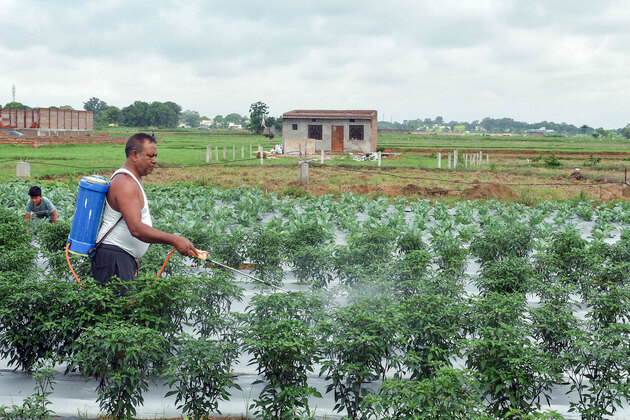
New Delhi [India], March 26 (ANI): Supply chain disruptions stemming from the ongoing conflict in the Middle East can potentially impact annual domestic production of both complex fertilisers and urea by 10-15 per cent, according to a report by Crisil Ratings.
Profitability of manufacturers could decline amid lower capacity utilisation due to supply constraints of key raw materials.
The report further noted that the increase in prices of raw materials and imported fertilisers is likely to increase the working capital requirement of players and also raise the subsidy bill of government by Rs 20,000-25,000 crore.
Nevertheless, two factors will support credit profiles - firstly, the strong liquidity of large fertiliser companies and secondly, the government's track record of supporting the sector over time with adequate and timely subsidy disbursements, the report stated.
Urea accounts for 45 per cent of fertiliser consumption in India, complex fertilisers (diammonium phosphate, or DAP, and nitrogen, phosphorus and potassium, or NPK) for one-third, and single super phosphate (SSP) and muriate of potash (MOP) for the rest.
Fertiliser sector's dependence on imports remains high, with ~20 per cent of urea and one-third of complex fertilisers, primarily DAP, being imported. Furthermore, the key raw materials for urea (natural gas, which comprises ~80 per cent of the raw material cost) and complex fertilisers (ammonia and phosphoric acid) are largely imported due to limited domestic reserves.
For both urea and DAP imports, the Middle East remains an important region, accounting for ~40 per cent of imports in the first nine months of fiscal 2026 (42 per cent in fiscal 2025 and 28 per cent in fiscal 2024). For domestic fertiliser production, the dependence on the Middle East is even higher, with ~60-65 per cent of liquefied natural gas (LNG) and 75-80 per cent of ammonia imports coming from the region.
Anand Kulkarni, Director, Crisil Ratings, says, 'The ongoing issues in the Middle East could disrupt the fertiliser supply chain at a crucial time for the kharif season. Disruption in LNG and ammonia supplies continuing for about three months could cut domestic urea and complex fertiliser production by 10-15%. The impact on production will be cushioned to some extent by the recent government directive for the allocation of 70% gas to urea manufacturers. Additionally, the fertiliser inventory of around three months, along with expected imports from alternative sources, will mitigate the risk of immediate supply shortages.'
The reduced capacity utilisation is likely to dent profitability, with urea manufacturers likely to see a larger impact as suboptimal capacity utilisation will reduce energy efficiency.
Profitability of urea players primarily hinges on the difference between prescribed energy norms and actual energy consumption, as natural gas costs are completely passed through. Energy consumption of efficient players is ~5 per cent lower than the prescribed norms, which directly boosts their profitability. However, with a decline in capacity utilisation, energy efficiency will take a hit, leading to an impact on operating profits. Nonetheless, players with multiple plants may optimise gas usage between plants to lower the impact.
Similarly, the profitability of complex fertilisers may get impacted due to the interplay of variables such as rising input costs, transmission of costs to the Nutrient Based Subsidy (NBS) rates set by the government, and retail prices.
The shortage of raw materials and increased supply chain costs have already increased prices of ammonia by ~24 per cent since the start of the conflict. With limited ability to pass on these costs, the extent of impact on profitability will depend on commensurate hikes in NBS rates.
The industry will require additional subsidy support from the government to mitigate the impact. Given the strategic importance of the sector, the government has supported it in the past through increased NBS rates and additional subsidy for DAP players.
The ability of fertiliser makers to source key raw materials and fertilisers from alternative sources and government intervention in this regard will bear watching in case the Middle East conflict prolongs, the report concluded. (ANI)
Get a daily dose of Iran Herald news through our daily email, its complimentary and keeps you fully up to date with world and business news as well.
Publish news of your business, community or sports group, personnel appointments, major event and more by submitting a news release to Iran Herald.
More InformationATLANTA, Georgia: American air travelers believe that the only way out of the long queues for security checks now being seen at airports...
NEW YORK, New York - U.S. stocks advanced on Wednesday after it was reported the United States had offered Iran a deal to end the...
DUBLIN, Ireland: Excise duty on petrol and diesel is likely to be cut to help people cope with volatile fuel prices. The decision...
DETROIT, Michigan: For some U.S. consumers, the search for an affordable electric vehicle is leading to a frustrating conclusion: the...
NEW DELHI, India: Indian drugmakers have begun launching lower-cost versions of popular diabetes and weight-loss drugs Ozempic and...
NEW YORK, New York - U.S. stocks finished mostly lower on Tuesday, while global markets delivered a mixed performance as geopolitical...
American President Donald Trump says the U.S. has held two days of talks with Tehran on a plan to end the war and has scrapped a 48-hour...
NEW DELHI/SINGAPORE: Refiners in India and across Asia are exploring purchases of Iranian oil after the United States temporarily eased...
MANAMA, Bahrain A pre-dawn explosion that tore through homes in Bahrain earlier this month, injuring dozens of civilians including...
ATHENS, Greece: Dozens of dogs and cats arrived in Athens on March 18, with their owners aboard a special evacuation flight for Greeks...
LONDON/DUBAI: Airline disruptions from the Iran war are forcing planes into long detours and even full round-trips back to origin,...
New Delhi [India], March 26 (ANI): Supply chain disruptions stemming from the ongoing conflict in the Middle East can potentially impact...